 Change currency
 EUR
Token Run, the Drag Strip add‑on and our themed packs were originally planned for release across multiple STL platforms. After speaking directly with several of them, we chose not to proceed.
We only partner with platforms that offer genuine visibility and support for original work. Token Run is a fully engineered, copyrighted system with unique mechanics and we’re committed to protecting it properly.
Some platforms expressed interest in early access and preview images, but were only willing to offer temporary social‑media stories rather than meaningful placement or long‑term visibility. For a project of this scale, that simply isn’t enough.
So for now, Token Run will launch exclusively on our website, where we can maintain full control over customer protection, attribution and the integrity of the ecosystem.
We appreciate every creator and platform that genuinely supports originality - and we look forward to expanding Token Run to spaces that value it as much as we do.
A final note on visibility.
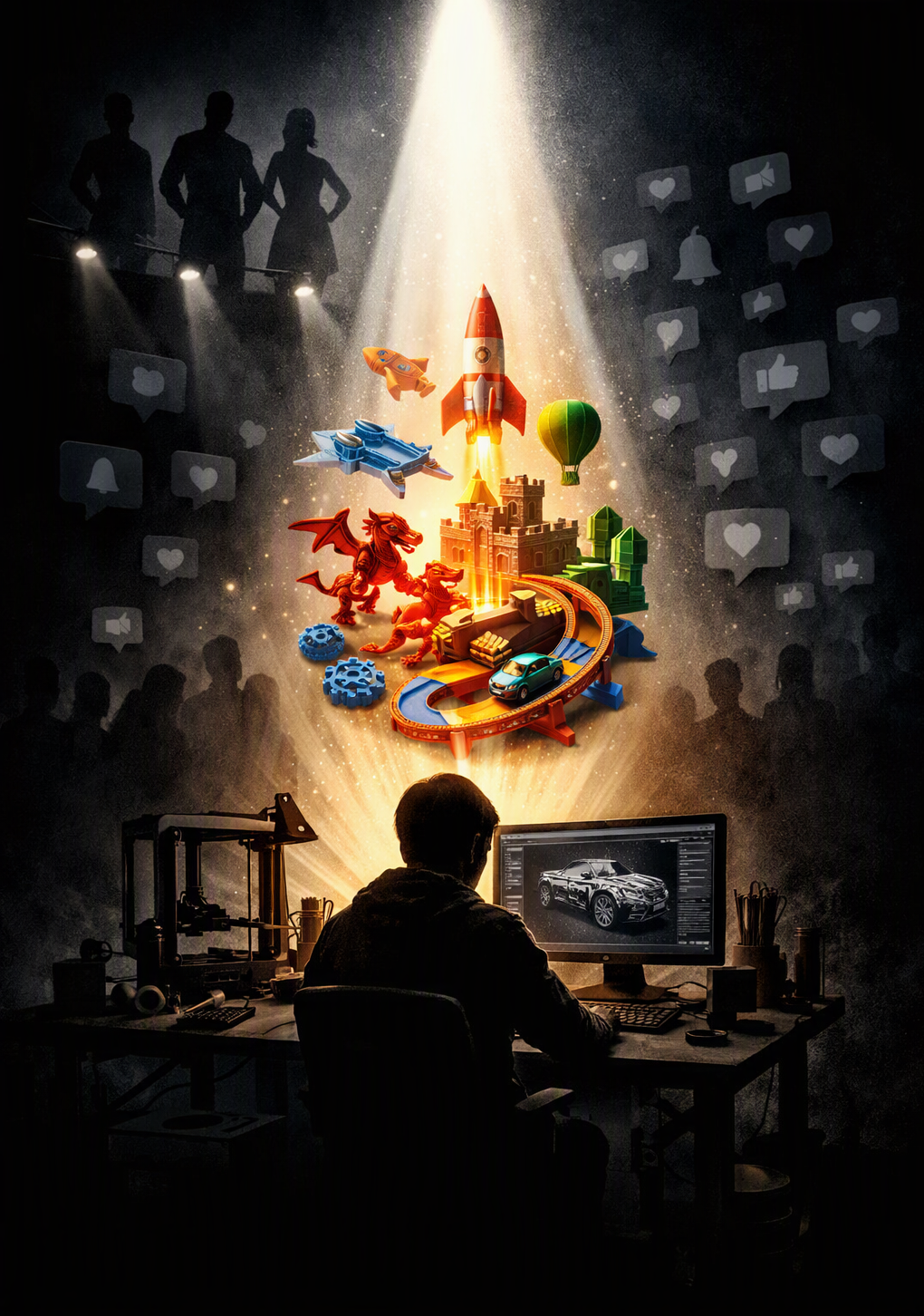
Token Run has been built over weeks, I've been designing on and off for years and throughout that time we’ve learned something important about the modern creator landscape: visibility isn’t merit‑based. It isn’t skill‑based. It isn’t originality‑based. It’s algorithm‑based and algorithms don’t always reward the people doing the most interesting work, algorithms can also be heavily controlled by humans.
Our Instagram account has been a 3D‑printing page for over nine years. Every post, aside from some photos of our dogs, has been printing, modelling, prototyping or engineering. Yet after hashtags were removed, our reach collapsed overnight. Posts that once reached thousands and gained lots of likes now struggle to reach the community at all. Even collaborations are pushed to unrelated audiences, making genuine engagement almost impossible.
The same pattern appears on other platforms. Impressions reset, hashtags fail and visibility fluctuates in ways that don’t reflect the quality of the work. Meanwhile, a small group of “favourite” creators are promoted repeatedly, with only safe, non‑threatening designs shown in between. It’s a protected loop - not because those creators are better, but because hype circles amplify them while everyone else is quietly filtered out.
If you’re a designer struggling with visibility, please know this: you’re not failing - you’re being filtered. Your work isn’t “not good enough.” It’s simply not being shown.
We even reached out to a couple of small Instagram accounts - the kind that regularly share other people’s prints and seem deeply embedded in the part of the 3D‑printing world where people actually buy STLs. We thought it would be a good opportunity to network, especially with creators who appeared supportive of new designs. Instead, we were completely ignored.
What made it stranger was what they did choose to share. One of the models they promoted was widely criticised for its quality: a low‑effort AI character with jagged edges, multi‑colour printing that didn’t work, and a component that repeatedly broke during assembly. Comments on the platform where it was sold flagged all of these issues - yet the same account shared the model again just a few weeks later.
It highlighted something we’ve seen repeatedly: visibility isn’t about quality, originality or engineering. It’s about circles, comfort zones and who platforms feel like amplifying. Skilled designers can be overlooked entirely, while low‑quality work is boosted simply because the person fits neatly into the existing social loop.
We encourage creators to support each other directly rather than feeding the same large accounts that are already boosted nonstop. The community grows when new voices are seen, not when the same few are recycled endlessly.
Token Run exists because originality still matters. We’ll keep building, sharing and creating - even when the algorithms makes it harder than it should be.
Another challenge facing creators today is the rise of low‑quality spam and outright theft. Many 3D‑printing platforms are flooded with stolen free models and re‑uploads of other people’s paid work. It’s a problem that’s often ignored and sometimes even rewarded, we have brushed on this topic in other blogs. Years ago, one of our designs was purchased, re‑uploaded to the same platform and sold under a different name. Despite there being only two identical models in existence and nothing else like it on the platform at that time, the platform failed to detect the theft. The uploader earned tens of thousands of pounds before being quietly removed. The platform kept its commission. No compensation was offered, no visibility was given to the original designer and no guidance was provided on how to pursue legal action or recover data.
Platforms are legally obliged not to share customer information, but that doesn’t prevent them from supporting the victims of theft - by offering advice, visibility, or even basic acknowledgment. Instead, stolen work is often brushed aside while low‑effort uploads continue to dominate along with a few chosen creators.
Creators deserve better. As a severely partially sighted designer, I’m never surprised by the cruelty that exists within creator communities -those who choose to ignore skilled designers and pretend they’re the blind ones.
Two major platforms publicly ignored posts showing how happy a child was playing with Token Run. These weren’t vague tags or low‑effort uploads - they were genuine moments of joy, shared directly with the platforms, featuring part of the ecosystem they already knew existed. Both platforms saw the posts. Both were tagged. Both chose silence.
It’s a strange kind of cruelty that exists in creator spaces: not loud, not aggressive, just deliberate non‑engagement. When a child’s excitement isn’t enough to earn acknowledgement, it becomes clear that visibility isn’t about community, creativity or impact - it’s about circles. If you’re not in the circle, even the most wholesome content is ignored.
For designers outside those circles, this can feel personal, but it isn’t. It’s structural. It’s selective. It’s happening to far more creators than people realise.
One of the hardest lessons in this space is that marketing often outweighs craftsmanship. A low‑effort model with glossy photos will outperform a beautifully engineered design every time. Quality doesn’t matter - presentation does. Platforms reward whatever looks good in a thumbnail, even if the model itself is fragile, poorly designed or barely functional. Meanwhile, creators who spend weeks perfecting tolerances, mechanics and usability are pushed aside simply because they don’t produce “viral‑style” images.
This isn’t a reflection of skill. It’s a reflection of an ecosystem where appearance is valued more than substance. When platforms amplify eye‑catching spam over genuine design work, it becomes even harder for creators who prioritise engineering, originality and long‑term value to be seen at all. The truth is, even high‑end marketing photos won’t save you if your work risks outshining those who rely on everyone believing they’re the best. Visibility isn’t just about presentation - it’s about politics, circles and who platforms feel like promoting.